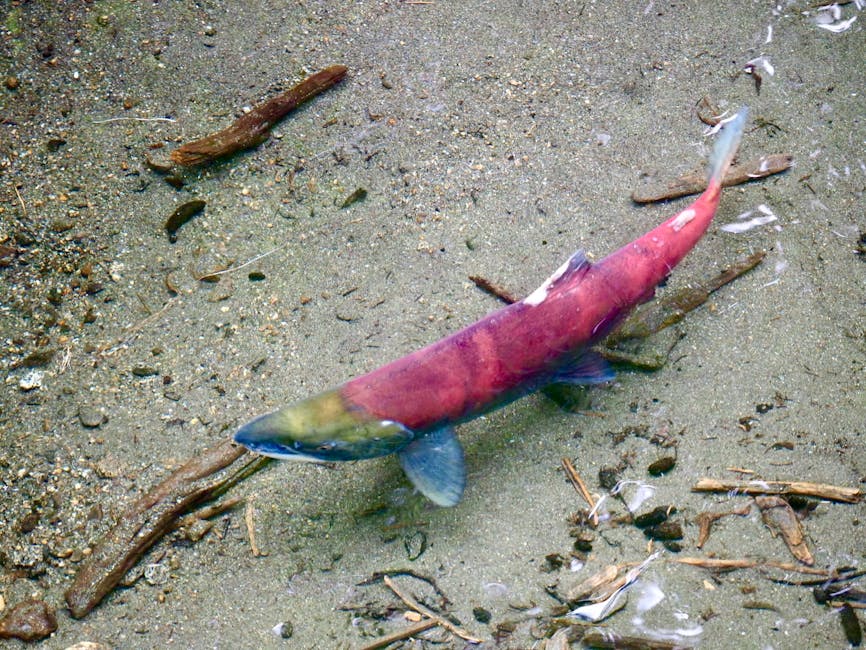
Combat fishing for sockeye in Alaska is a specific kind of experience. You're standing shoulder-to-shoulder with 40 other anglers along a half-mile of river. Everyone is casting 5 to 10 feet out and flipping the same basic rig through the same seam of red-backed fish pushing upstream. A newcomer sees chaos. A veteran sees a well-orchestrated, if unglamorous, system for catching clean, red-meated sockeye to fill the freezer.
The Sockeye Run
Sockeye salmon return to natal streams to spawn. In Alaska, major runs include:
- Kenai River (mid-June to late August) — Alaska's most popular sockeye fishery
- Russian River (late May to early August) — confluence with Kenai, prime combat ground
- Kasilof River — less crowded alternative to the Kenai
- Copper River — the famous commercial fishery; sport access more limited
- Bristol Bay (late June to mid-August) — remote, requires charter or fly-in
Peak returns in July. The 2nd and 3rd weeks of July on the Kenai/Russian systems are the reddest bank-to-bank water you'll see anywhere.
The Technique
Sockeye don't eat much on the return journey. They're running on stored body fat heading upriver to spawn. Their mouths open to breathe, not to feed. The "sockeye flip" exploits this biology.
The Rig
- 8 to 10-foot salmon rod, medium-heavy
- Level-wind or spinning reel with 25 to 40 lb mainline
- 18 to 24 inches of 25 to 30 lb monofilament leader
- Large size 1 or 2/0 sockeye hook, often a Gamakatsu Octopus or a barbless version required in some regulations
- 1/2 to 3/4 oz slider weight on the main line, stopped by a bead and swivel
The Cast
You flip the weighted rig 5 to 10 feet out into the current. The weight bounces along the bottom while the hook trails behind at the right depth to intercept the open-mouthed sockeye swimming upstream.
The take feels like a sudden heavy stop. Set the hook with a firm upstream sweep. Legally hooked sockeye are hooked in the mouth or upper jaw. A fish hooked elsewhere (tail, belly, flank) is a foul-hooked fish and must be released immediately.
Combat Fishing Etiquette
The fishing is crowded. You will be within arm's reach of other anglers. Rules of the line:
The Fish-On Rotation
When someone hooks up, everyone downstream of the fish reels in. The hooked angler is allowed to work the fish downstream. You step aside and let them play out. When the fight is over, everyone returns to their spot and continues.
The Line Order
Anglers cast in rotation — you cast, the person next to you casts, down the line. Getting out of sequence creates tangles. Pay attention to the rhythm of the water.
No Casting Over
Don't cast your line over someone else's. Don't retrieve across someone else's drift. If you tangle, help untangle without blame.
Keep Your Space
Four to 6 feet of personal space is normal on combat water. Eight to 10 feet is considered roomy. The angler who takes 15 feet is either being inconsiderate or doesn't understand the system.
Landing and Dispatching
A hooked sockeye often runs hard, sometimes downstream where they can be landed. Use a landing net or beach the fish in shallow water. Dispatch the fish quickly — a tap to the head with a priest or the butt of a knife — and bleed by cutting the gills.
Get the fish on ice immediately. Sockeye quality deteriorates fast in summer Alaska conditions. A cooler with 10+ pounds of ice per fish is not excessive.
Limits and Regulations
Alaska Department of Fish and Game sets daily bag limits based on run estimates. Kenai River sockeye limit typically 3 to 6 per day depending on the run. In-season adjustments are common; always check the Emergency Order page for the specific area before your trip.
Catch record card required. Annual limits apply. Foul-hooked fish must be released. Barbless hooks required on some waters during certain runs.
Access
Kenai River (Russian River Campground area)
Multiple campground areas and boardwalk access points. High use during peak runs. The famous "Combat Zone" is roughly the first half-mile below the Russian River confluence.
Kasilof River
Drift boats are common. Bank access at several state-maintained spots. Less crowded than the Kenai; slightly earlier peak runs.
Bristol Bay Lodges
Fly-in or boat-in only. A week-long trip runs $4,000 to $10,000+ depending on the lodge. Remote, fewer crowds, multi-species opportunities (rainbow trout, Dolly Varden, pike) alongside sockeye.
Gear
- Rod: G. Loomis IMX Pro Salmon, Lamiglas X11 Salmon, Okuma Classic Pro. $150 to $350.
- Reel: Shimano Calcutta, Abu Garcia Revo Toro Beast, Penn Squall. $150 to $400.
- Waders and wading boots — water is cold, currents swift. Simms Freestone or Redington Sonic-Pro. $300 to $600. Felt sole or rubber with studs.
- Polarized glasses — essential for seeing fish and bottom.
- Rain gear — Alaska is wet. Grundens Gage series, Simms G4 Pro.
The Experience
Some fly-fishing purists look down on combat sockeye fishing. I won't defend it as elegant. I will defend it as productive, social in its own way, and a legitimate Alaska tradition for locals and visitors who want to fill a freezer with red-meated salmon.
A four-fish morning on the Kenai in July gives you 20+ pounds of dressed sockeye to take home. Smoked, canned, grilled, or frozen, it's family food for months. That's worth standing shoulder-to-shoulder with 40 strangers on a Tuesday morning at 6 a.m.
Beyond Combat
If combat fishing isn't your idea of an Alaska trip, book a lodge in Bristol Bay or an outfitted float trip. Same fish, less crowd, more money. Both approaches produce fish and lifetime memories. Neither is objectively better — they're different experiences of the same amazing run.