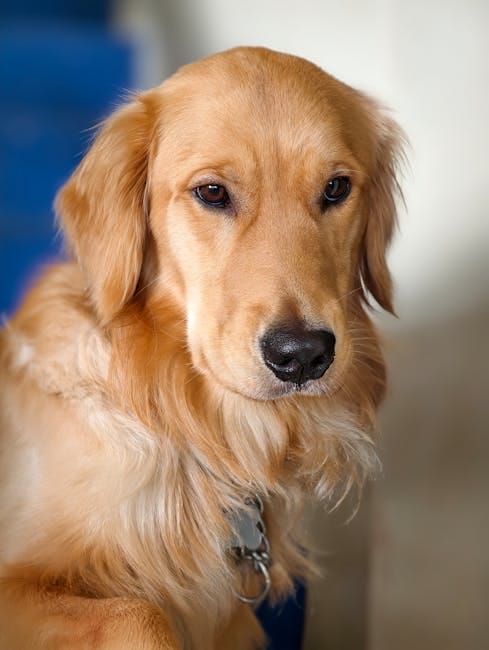
A guy in my duck club brought home a yellow Lab puppy from a breeder in Arkansas three years ago. The dog came from excellent hunting stock, her father was a master hunter with titles, her mother had been on the cover of a hunting dog magazine. The guy paid $1,800 for the puppy and assumed the bloodline would produce a hunting dog without much effort on his part. That dog is now 3 years old, weighs 75 pounds, and will not retrieve a duck to save anyone's life. She loves the water but drops birds halfway back. She has developed a hard mouth that crushes every duck she picks up. She also sees ducks in the sky and tears out of the blind at the first shot, which is dangerous. The owner wanted a hunting dog. He got a pet that happens to enjoy water.
The failure was not the bloodline. The failure was the training, or the lack of it. A hunting dog is made, not born. Genetics load the gun, but the trigger pull is the work you put in at home during the first two years. I have trained three Labs and seen training success and failure in other people's dogs enough to know what works. This article covers the fundamentals of home-based training for the three main categories of hunting dog: retrievers, pointers, and hounds. Each has different needs. Each has different methods. Get the fundamentals wrong and no amount of later work fixes them.
Retrievers: Obedience First, Retrieving Second
A retriever, Labrador, Chesapeake Bay Retriever, Golden Retriever, or similar breed, has the instinct to chase and carry objects built in. What is not built in is self-control. A dog that cannot sit still for 10 minutes in a duck blind is useless. A dog that breaks to every splash is a safety hazard. A dog that will not drop a bird on command is destroying every bird you shoot.
The foundation for a hunting retriever is obedience. Sit, stay, heel, and come, reliably, off-leash, with distractions, before you ever introduce birds. This training starts at 8 weeks with the puppy and takes 6 months of daily work to ground in. I use the following schedule with a new Lab puppy.
Week 1 to 4, name recognition, leash walking, crate training, house manners. 15 minutes, twice a day.
Week 4 to 8, basic sit and come, introduced at home on a check cord. Short sessions, 10 to 15 minutes, twice a day.
Week 8 to 16, reinforcement of sit and come, introduction of stay and heel. Extended to 20 minutes per session, twice a day, in varied environments.
Week 16 to 24, transition off the check cord to free-standing off-leash obedience. Distractions introduced gradually, first quiet neighbors, then busy parks, then eventually birds flying overhead. Force-fetch training begins around 4 to 6 months for breed-appropriate candidates.
Force Fetch
Force-fetch is the single most important training element for a hunting retriever. It teaches the dog to take the retrieve object on command, hold it without chewing, carry it on a specific path, and release on command. Without force-fetch, you get dogs that drop birds, chew them, or refuse to bring them back on windy days.
Force-fetch is a technical training procedure with real potential to damage the dog-human relationship if done wrong. I strongly recommend either attending a week-long training clinic with a professional trainer, or working with a local professional trainer who does force-fetch. This is not something to learn from a YouTube video. The procedure involves escalating pressure, carefully timed, and the missteps are costly.
A professional force-fetch program runs $300 to $600 and takes 4 to 6 weeks. At the end, your dog is a trained retriever in the foundational sense. Skipping this step is the single most common reason hunting retrievers fail in the field.
Pointers: The Search and the Point
Pointing breeds, English Pointers, German Shorthairs, Brittanys, Setters, and others, have a different training curve than retrievers. The instinct is to find birds, point them, and hold point until the hunter arrives. The pointing instinct itself is genetically hardwired in quality bloodlines. What is not hardwired is range control, steadiness, and whoa.
Range control is the critical skill. A pointer that ranges 300 yards in front of the hunter is useless unless the hunter has a GPS collar to track him and a quad bike to catch up. A pointer that ranges 30 yards in front is useful but inefficient. The ideal range for an upland pointer is 50 to 150 yards depending on terrain, and that range is trained through check-cord work starting at 6 months of age.
Whoa training, the command that tells the dog to freeze exactly where it is, is the other critical pointer skill. A bird moves. The dog moves to adjust. A well-trained pointer, on the whoa command, freezes regardless of how the bird behaves. This is trained with a whoa post, a stake that the dog is tied to with a check cord, while the handler approaches with birds to desensitize the dog to movement during point.
Birds, Birds, Birds
The critical difference between a pointer and a retriever in training is exposure to birds. A pointer needs dozens to hundreds of bird contacts during the first two years to develop full pointing behavior. A retriever can develop fine on a few dozen bird contacts. Pointers need more, earlier, and with more variety.
Homing pigeons, quail, and pen-raised pheasants are all acceptable training birds. Wild birds are the best training but are hard to provide in controlled conditions. A local kennel or bird club that provides pen-raised birds for training is a valuable resource, even if you end up paying $15 to $30 per bird used.
A pointer that has not encountered 200 birds in its first two years will not develop into a finished hunting dog. A retriever that has not encountered 50 birds in the same time will still be useful if the obedience is there. This is why pointer owners have to put in more training work than retriever owners.
Hounds: The Honorable Outlier
Hounds, Beagles, Walker Coonhounds, Plott Hounds, Redbones, and similar breeds, are trained very differently from retrievers and pointers. The instinct is to follow scent and voice-track game. The training is mostly about teaching the dog to work with a pack, come to the horn, and discriminate game type.
Hounds are typically trained in packs with older experienced dogs. A young hound learns from the older hounds what to bark at, how to follow a line, and when to quit. Solo hound training is possible but slower. Most hound trainers keep at least 3 to 6 dogs of varying ages to maintain a working pack.
The most important commands for a hound are come, which is usually trained through horn recall, and leave-it, which is critical to prevent the dog from chasing game you did not intend to pursue. A Walker Coonhound that will abandon a raccoon chase to follow a deer is not useful. The leave-it command is trained with pressure and reward through repeated trial over months.
Voice Work
Hounds are trained partly by voice, which is why experienced houndsmen seem to be constantly yelling at their dogs. The yelling is actually reinforcement. The dogs learn the handler's voice cues and respond to specific tones and words. A hound that has not been worked by voice consistently will not be reliable in the field.
GPS collars like the Garmin Alpha series have transformed hound hunting. A handler can track his pack in real time across miles of terrain, know which dog is running which game, and recover lost dogs quickly. The cost is $800 to $1,200 per dog for a collar plus handheld, which is substantial, but for serious hound hunters the productivity gain is worth the investment.
Common Mistakes Across All Breeds
Too much freedom too early. Puppies allowed to run loose before obedience is established learn that they can ignore the handler. Recovering from this is harder than training correctly from the start.
Inconsistent commands. Family members use different commands, or the same command means different things at different times. The dog becomes confused and stops responding reliably. Every family member who will train the dog must use identical commands and expectations.
Punishing after the fact. A dog that returns to the handler after 10 minutes of chasing rabbits should not be punished on arrival. The dog will interpret the punishment as punishment for coming back, and return less reliably in the future. If you are going to correct, correct during the behavior, not after.
Skipping obedience. The most common failure in hunting dog training. The dog is fun in the yard playing fetch, so the training is "done." Then the dog is taken hunting and the lack of obedience foundation shows immediately. Obedience is not the fun part of training. It is the essential part.
The Time Commitment
A hunting dog, properly trained, takes 15 to 30 minutes a day, every day, for the first two years. That is 100 hours a year, roughly, of deliberate training. Most first-time hunting dog owners do not put this time in. They assume the dog will absorb training naturally. The dog does not.
The professional trainer route accelerates this. A 6-month professional training program with a reputable kennel costs $3,000 to $6,000 and produces a dog that is nearly ready to hunt. This is a reasonable investment for a hunter who does not have the time or patience for daily home training. Ask other hunters for trainer recommendations before committing that money, because trainer quality varies enormously.
A home-trained dog from a dedicated owner is as good as a professionally trained dog, and the bond with the owner is often deeper. But "dedicated" means 15 minutes a day for two years, not weekends only. If you cannot commit the time, hire the trainer. Your dog will be happier and hunt better.
The Honest Truth
Most hunting dogs are under-trained. Most owners assume the breed and bloodline will do the work. The breed and bloodline provide the potential. The training makes the dog. A mediocre-breed dog with excellent training will out-hunt a champion-bloodline dog with poor training in almost every scenario.
If you are considering a hunting dog, commit to the training time before you bring the puppy home. If you cannot commit, buy an older trained dog or hire a trainer. The worst outcome is a well-bred puppy that becomes a badly-trained adult because the owner was not ready to do the work. This happens constantly, and it is preventable.