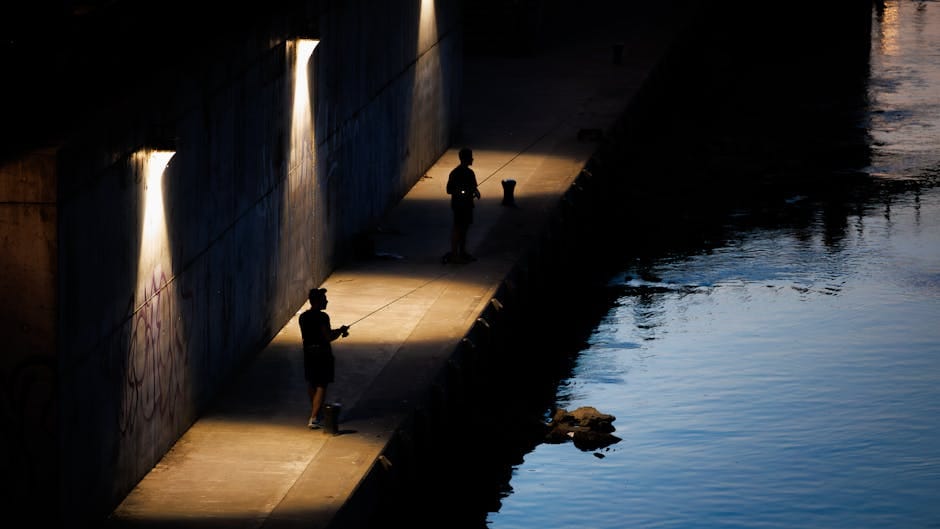
Catfishing after dark is the old American fishing tradition. You set up a lantern on the bank of a Midwestern reservoir or the Mississippi River, toss out bait rigs on three or four rods, and sit in a lawn chair while the bells on your rod tips stay silent for thirty minutes and then ring all at once. It's slow, then fast, then slow again.
Done right, night catfishing consistently produces big fish. Done wrong, you sit in the dark for six hours with mosquitoes and empty hooks.
The Species
Channel Catfish
Most widespread, average 1 to 5 pounds, trophies to 20+. Found everywhere in the continental US. Eat almost anything.
Blue Catfish
Large, aggressive, fish-eaters. Range from the Mississippi River drainage through the South. Trophies commonly 30 to 60 pounds; world record over 140. Prefer fresh cut bait, often live bait.
Flathead Catfish
The ambush predator. Prefer live bait almost exclusively. Trophies 30 to 80 pounds. Found in major river systems — Mississippi, Missouri, Ohio, and their tributaries.
Where to Fish
Reservoirs
Dams, inlet creeks, deep flats, submerged creek channels. Any major reservoir with a cat population — Milford Lake in Kansas, Lake Texoma, Santee Cooper in South Carolina, Wilson Lake in Alabama.
Rivers
Tailwaters below dams are catfish gold. The Mississippi, Missouri, Ohio, Tennessee, and their tributaries all hold excellent cat populations. Fish the deep holes, current seams, and eddies below wing dams and lock-and-dam structures.
Small Ponds and Lakes
Farm ponds with stocked channel cats produce quick results. Local community lakes with urban catfish programs are good for a few hours on a summer evening.
The Rig
Slip Sinker Rig (Classic)
- Egg sinker (1 to 4 ounces depending on current)
- Bead
- Swivel
- 18 to 36 inches of leader material (20 to 50 lb mono or fluoro)
- Circle hook (size 4/0 to 8/0 depending on target)
- Bait
Santee Cooper Rig
A slip sinker rig with a small float added just above the hook. Suspends bait slightly off bottom. Good for fish that prefer bait at a specific depth or in areas with a muddy bottom.
Three-Way Swivel Rig
For targeting fish holding at a specific depth or current position. Mainline ties to one eye of a three-way swivel; a leader drops to sinker; another leader goes to the hook. Good for current fishing.
Bait
Cut Bait
Skipjack, shad, herring, bluegill, carp — cut into 2 to 4-inch chunks. The oil and blood from fresh cut bait is the strongest attractant for blues and channels. Fresh is better than frozen; frozen is better than none.
Live Bait
Live bluegill, small carp, creek chubs, or suckers. Primarily for flatheads. Hook through the back behind the dorsal fin for natural movement.
Prepared Bait
- Chicken liver — $3. Classic cheap bait. Works on channels especially.
- Sonny's Dip Bait — $10 per bottle. Smelly, messy, productive on channel cats.
- Shrimp — $5. Cheap and effective
- Hot dogs soaked in garlic and Kool-Aid — don't laugh. Works on summer channels.
- Night crawlers — $5 per dozen. Smaller channels and junior flatheads.
Rod and Reel
Catfish rods are heavy and long for casting big weights and baits. Target size determines your setup.
Channel Cats (1 to 10 lbs)
- 7-foot medium-heavy or heavy rod
- Abu Garcia Catfish Commando, Okuma ClassicPro, Ugly Stik Catfish
- 4000 to 5000-size spinning reel or level-wind reel
- 20 to 30 lb braid or 25 lb mono
Blue and Flathead (Trophy Sizes)
- 8 to 10-foot heavy rod
- Ugly Stik Tiger, Abu Garcia Ambassadeur, Penn Battle
- Level-wind reel (Abu Garcia C3, Penn Fathom) or large spinning reel
- 50 to 80 lb braid mainline, 40 to 80 lb mono leader
The Setup on the Bank
Rod Holders
Essential. You need to hold multiple rods at different angles. Bank sticks (ROD holders driven into the ground), kayak-style rod holders, or a rod rack system. $20 to $100 for a setup for four rods.
Bite Alarms or Bells
Clip-on bells for the rod tip are the old-school method. Electronic bite alarms (Anaconda, Fox) are more sensitive and let you doze between bites. $10 to $80.
Lights
- Bank lantern — Coleman propane, Streamlight LED. Attracts bugs and sometimes baitfish. Some anglers avoid near the hook area.
- Headlamp with red filter — for rigging and unhooking without ruining night vision
- Rod-tip glow sticks — $3 for a 10-pack. Attach to rod tips for visible bite detection
Timing
Catfish feed heaviest:
- Summer, water temperatures 70 to 85°F
- Two hours after sunset through midnight (peak window)
- Dawn to an hour after sunrise
- Overcast or rainy weather shifts feeding patterns earlier
- Post-rainstorm, rising water, increased current — often triggers active feeding
A Typical Night
Arrive at the spot 90 minutes before sunset. Set up rods, rigs, and bait. First cast at sunset. First fish in first hour? Great sign — stay patient. No fish by 9 p.m.? Change baits, maybe locations.
Bring coffee, snacks, a comfortable chair, and a buddy or a book. The slow hours are the waiting-for-bite hours. The action comes in pulses, especially around 11 p.m. to 1 a.m.
Landing Big Cats
A 20-pound blue catfish on the bank is a handful. A 40-pounder is a two-man job. Have a large landing net or a lip-grip device ready. Wear gloves — catfish fins and their own body slime combine for cuts and abrasions.
Weigh quickly, photograph, and release the trophy fish. Eat smaller catfish — the 2 to 8-pound range eats best anyway.
Eating
Catfish meat is mild, white, and versatile. Fried (the traditional preparation), grilled, blackened, or in stews and gumbo. Skin removal is essential — use electric fillet skinning pliers or skin with a hook. Remove any red or yellow meat for cleaner flavor.
The Real Appeal
Night catfishing is one of the last accessible, affordable fishing traditions in America. You can catch 40-pound blue cats with $200 in gear and a bag of cut shad. The fish don't require boat payments or expensive guides. A good night out on a Mississippi River sandbar, with a cooler of drinks and a few rods in the dark, is the fishing version of old times — and it still works.