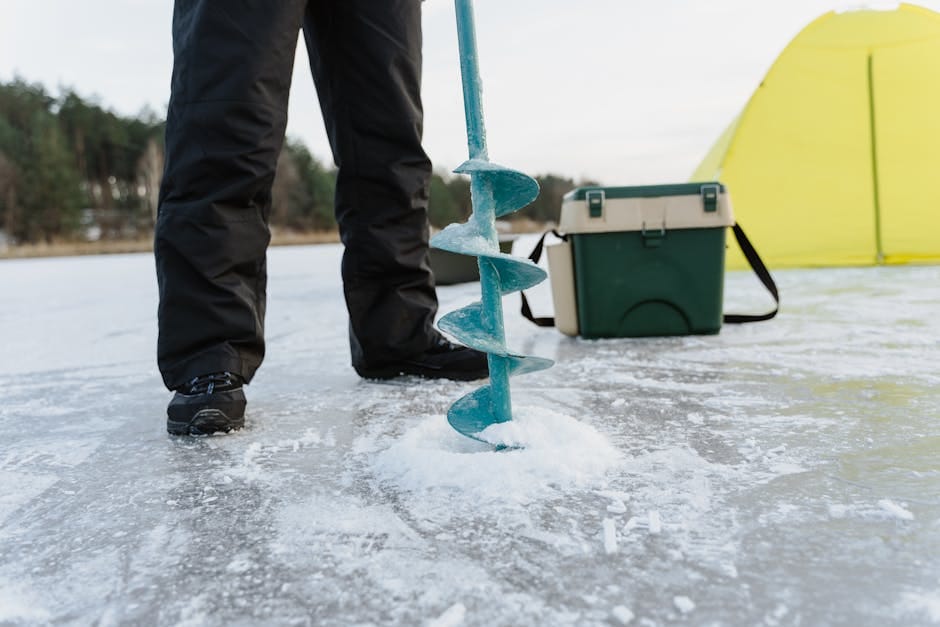
Modern ice fishing looks like something out of a sporting-goods arms race. Insulated wheel houses with lithium batteries, flatscreens, and LiveScope sonar. Carbon fiber ice rods with LED strike indicators. Propane heaters that cost more than a used car.
You don't need any of it. A competent ice angler with $400 in used gear catches as many fish on a Wisconsin panfish lake as the guy next to him with a $20,000 rig. The fish don't read catalog pages.
What You Actually Need
- Hand auger or a used power auger
- One or two ice rods with reels
- A few jigs and jigheads
- Live bait (minnows, wax worms, spikes)
- A five-gallon bucket
- A hand skimmer for clearing the hole
- Warm clothing
- A portable shelter OR the willingness to sit on a bucket
Total cost for this kit if starting from nothing: $250 to $500. Less if you buy used.
The Auger Decision
Hand Auger ($80 to $150)
A Nils 5-inch, Mora 6-inch, or StrikeMaster Lazer Hand Auger. Cuts through 12 inches of ice in 3 to 5 minutes per hole, less with sharp blades.
Pros: Cheap, reliable, quiet, never fails in cold. No fuel needed.
Cons: Slow on thick ice. Tiring at the end of a 20-hole day.
Power Auger ($300 to $700 new, $150 to $350 used)
Gas or electric (lithium battery). Strikemaster Lithium 40V, Eskimo Ice Auger, K-Drill with your own drill. Cuts through 20 inches of ice in 30 seconds.
Used: Facebook Marketplace in any Midwestern state has ice augers all winter. $150 gets a decent gas auger. $300 gets a working lithium model.
Rods and Reels
Budget Rod/Reel Combos
- Shakespeare Ugly Stik GX2 Ice Combo — $40. Basic but works.
- Frabill Bro Series Ice Combo — $50.
- Celsius Ice Combo — $30 to $45.
These cast-and-retrieve combos fish adequately. You're not going to split minnows with them like a high-end inline setup, but they'll catch panfish, walleye, and pike.
Slight Upgrade
- St. Croix Mojo Ice — $70
- Fenwick HMG Ice — $60
- 13 Fishing Tickle Stick — $80
Reels
A basic underspin or inline ice reel. Eagle Claw, Clam Ice Team, or Frabill at $15 to $50. The $150 inline reels are nice; the $30 ones catch fish.
Terminal Tackle
A basic panfish kit: small ice jigs (1/32 to 1/80 oz) in various colors, a few spoons (Kastmaster, Acme Phoebe), a handful of tungsten jigs, and some plastic wax-worm substitutes.
A walleye/pike kit: jigging Rapalas (size 3 to 7), PK Spoons, and some larger tungsten jigs.
Total terminal investment: $30 to $80.
Live Bait
Your local bait shop sells:
- Fatheads or shiner minnows — $5 to $8 per dozen
- Wax worms — $3 per dozen
- Spikes (mousies, maggot flies) — $3 per dozen
- Wigglers (mayfly larvae) — $5 per dozen
For a day of fishing: $10 to $20 in bait. Keep leftover minnows in a cooler with airstone, wax worms in the fridge.
Clothing
This is where not-skimping matters. Bad clothing ruins an ice trip faster than bad gear.
- Insulated bibs — Gander Outdoors, Arctix, or used Striker Ice on Facebook. $60 to $150.
- Insulated waterproof jacket
- Insulated boots rated to -20°F. Baffin, Muck Arctic. $120 to $200.
- Merino base layers — SmartWool or REI house brand
- Mittens over gloves — Mittens for warmth, gloves for dexterity when fishing
- Beanie hat, neck gaiter
Total clothing investment if starting from scratch: $300 to $500. Buy nice and buy once; cheap gear at -10°F fails.
Shelter
The Bucket Option
A five-gallon bucket with a padded seat or a camp chair. Works for all-day fishing in temperatures above 15°F. Free (or $15 for the bucket).
Pop-Up Ice Tent
- Used Eskimo or Clam — $150 to $300 on Facebook Marketplace
- New Eskimo Quickfish 3 — $260
- New Clam Kenai Pro — $350 to $450
A pop-up tent sets up in 30 seconds, blocks wind, holds heat. Pair with a Mr. Heater Portable Buddy ($70 to $110) and you're comfortable at 0°F.
Skip the Wheel House
Wheel houses (towable hard-sided shelters) are $6,000 to $40,000+. They're great. They're also unnecessary for catching fish. A pop-up tent does the basic job for 5 percent of the cost.
Electronics
None
Fish without electronics by targeting specific structures (points, humps, weed edges) where you know fish hold. Drill multiple holes, rotate between them.
Basic Flasher
- Used Vexilar FL-8 or FL-18 — $150 to $300 on Facebook
- New MarCum M1 or M3 — $300 to $500
A flasher shows bottom, your lure, and fish in real time. Changes everything about walleye and panfish fishing. Start here if you're going to invest in one piece of electronics.
Skip For Now
Garmin LiveScope ($2,500+), high-end combo sonar/GPS units ($1,500+). These are luxuries. You can catch plenty of fish without them.
The Full Budget Setup
- Used hand auger: $60
- Two Shakespeare ice combos: $70 for pair
- Assorted jigs, spoons, swivels: $40
- Five-gallon bucket, skimmer, small tackle box: $30
- Used pop-up shelter: $150
- Used Vexilar flasher: $200
- Used Mr. Heater and propane: $90
Total: $640. You'll also spend around $400 to $500 on clothing if you don't already have it.
For $1,000 to $1,200 total, you're fishing for walleye, pike, crappies, and bluegills across the entire Midwest through a full winter.
Where the Fish Are
Community fishing. Ask at bait shops; they tell you what's biting where. Most Midwestern states have lakes with active fishing communities — Cass, Leech, Mille Lacs in Minnesota; Winnebago in Wisconsin; Devils Lake in North Dakota; Lake Erie's Western Basin.
Smaller local lakes often fish as well or better than the famous ones, with far less pressure. Research local lakes on state DNR websites for walleye and panfish stocking and management.
The Honest Conclusion
Expensive ice fishing gear is fun. It's also a luxury that doesn't correlate with catching fish. Before you drop $4,000 on a wheel house and LiveScope, spend three seasons ice fishing with basic gear. You'll learn the fish, the water, and your own preferences. Then upgrade what actually matters to you.
Most ice anglers I know with $10,000+ in gear caught more fish per hour when they were starting out with $400 in junk. Experience and knowledge beat technology. Start cheap.