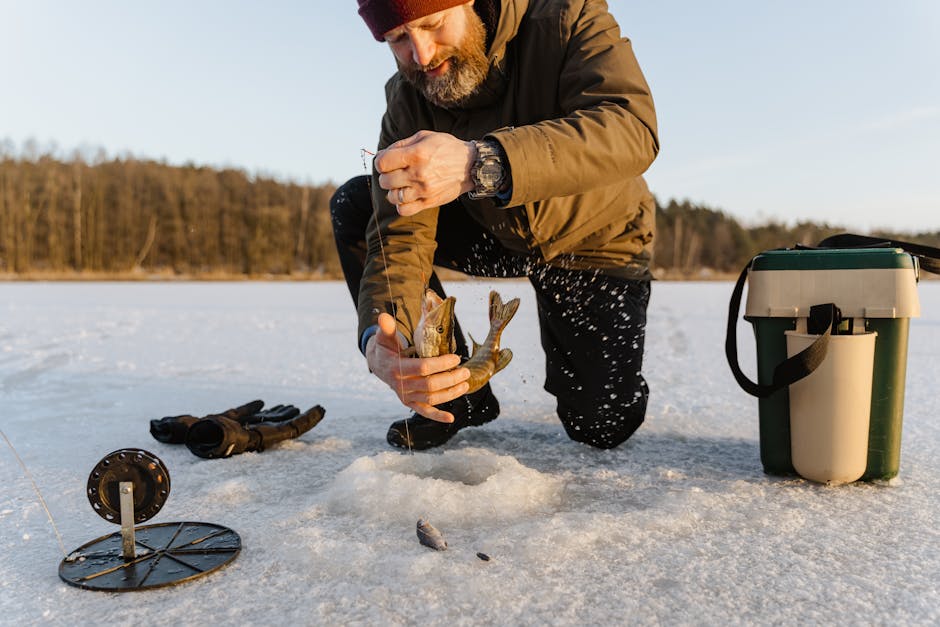
Ice walleye fishing looks insane to a Georgia angler. You're sitting on a frozen lake in a portable tent with a heater, staring at a sonar screen, wearing every piece of insulated clothing you own. It's 14 degrees outside. And there, on the screen, is a fish arcing up to your jig 18 feet below.
When a two-pound walleye inhales your Kastmaster tipped with a minnow head at 4 p.m. on a frozen February evening, all the logistics make sense.
Where and When
The best winter walleye and sauger fishing happens on the large border waters of Minnesota, North Dakota, South Dakota, and Wisconsin. Lake of the Woods (Minnesota/Ontario) and Devils Lake (North Dakota) are the big names, along with Lake Winnebago (Wisconsin), Mille Lacs (Minnesota), and the Missouri River tailwaters in South Dakota.
Season runs roughly December through March in most states, with closures and regulation changes mid-season. Check regulations annually — walleye limits and slot sizes change.
Ice Walleye Patterns
Winter walleye hold on structure — sunken points, rock reefs, transitions from hard bottom to mud, steep breaks between shallow flats and deeper basins. They're most active at dusk, dawn, and through the first hour of darkness.
In shallow lakes (Lake of the Woods, Devils Lake), walleye might be in 12 to 18 feet. In deeper lakes (Mille Lacs, Gull Lake), they're on structure in 20 to 35 feet. Sauger and saugeye often hold slightly deeper than walleye in the same systems.
The Setup
Ice Rod
- 28 to 32-inch medium-light to medium action ice rod
- Fenwick HMG Ice, St. Croix Mojo Ice, Clam Dave Genz Legacy
- $50 to $150
Reel
- Inline ice reel for minimal line twist
- 13 Fishing Black Betty FreeFall, Clam Hardwater Revolution
- $50 to $100
Line
- 4 to 6 lb monofilament or superline
- Berkley Trilene XL, Sufix 832 Advanced Ice
Lures
Jigging Spoons
- PK Lures PK Spoon — $5. Classic walleye ice spoon.
- Kastmaster — $4. Old reliable.
- Northland Buckshot Rattle Spoon — $6.
- Lindy Rattl'N Flyer Spoon — $7.
Jigging Minnows
- Rapala Jigging Rap — $10. The standard.
- Acme Kastmaster — $5.
- Moonshine Shiver Minnow — $9.
Jigs and Dropper Setups
A jigging spoon with a dropper hook tipped with a minnow head. The spoon attracts fish; the dropper catches them. Effective when walleye are finicky.
Electronics on the Ice
Ice electronics changed the game. A quality ice flasher or sonar unit shows bottom, fish, and your lure in real time.
- Marcum LX-7 or M5 — flashers, $600 to $1,000
- Humminbird Ice Helix — $800 to $1,500. Combo unit with GPS
- Garmin LiveScope Ice Fishing Bundle — $2,500+. Live sonar, the modern standard
- Vexilar FLX — $400 to $700. Classic flasher brand
You don't need live sonar for winter walleye, but it changes how you fish. With traditional sonar, you drop the lure and jig it; with live sonar, you see fish approach and adjust your retrieve accordingly.
Tip-Ups and Passive Fishing
A tip-up is a device that sits on the ice with a line and hook below. When a fish takes, a flag flips up. You run from your tent to fight the fish.
Tip-ups are good for covering multiple holes with different baits. Minnesota allows two lines; Wisconsin allows three (varies by water). Many anglers jig one rod actively and run one or two tip-ups with live minnows.
Live Bait
Fathead minnows, shiners, rainbow chubs — available at bait shops in walleye country. Keep them in a minnow bucket with aerator if you have a long drive to the lake.
A lively minnow hooked through the back behind the dorsal fin, suspended below a tip-up, is death on walleye. Most winter walleye caught in the Midwest are caught on live minnows, tip-up or dropper rig.
The Shelter
Portable ice tents (Otter, Eskimo, Clam) set up in minutes and provide a heated space to fish comfortably. $200 to $600 for a quality one-person portable. Full-size hub-style tents for groups run $300 to $700.
Propane heater: Mr. Heater Portable Buddy or Coleman BlackCat. $60 to $150. Never leave running unattended; carbon monoxide risk is real.
Clothing
Bibs and jackets rated for extreme cold — Striker Ice Climate, Clam IceArmor, Frabill I-Float. $300 to $800 for the combo. Insulated ice boots — Baffin Titan, Muck Arctic Sport. $180 to $280.
Underlayer: heavy wool socks, thermal base layers, midweight fleece. Mittens over gloves for the waiting times.
Getting Around
Large walleye lakes in winter are covered with pickup trucks, ATVs, snowmobiles, and pop-up tents. Highway networks develop on the ice. Resort rentals for ice houses are common on Mille Lacs, Lake of the Woods, and Devils Lake at $150 to $400 per night for a sleeper house.
Expectations
A good ice walleye day on a destination lake in January: 3 to 8 keeper walleye per angler, plus sauger, perch, pike, and the occasional tullibee or burbot. A great day: 15+ fish, one or two real trophies in the 6+ pound class.
Slow days are common. Walleye under a thick ice cover and high pressure go off the feed for hours. Being prepared to sit comfortably and fish through the slow times is the key.