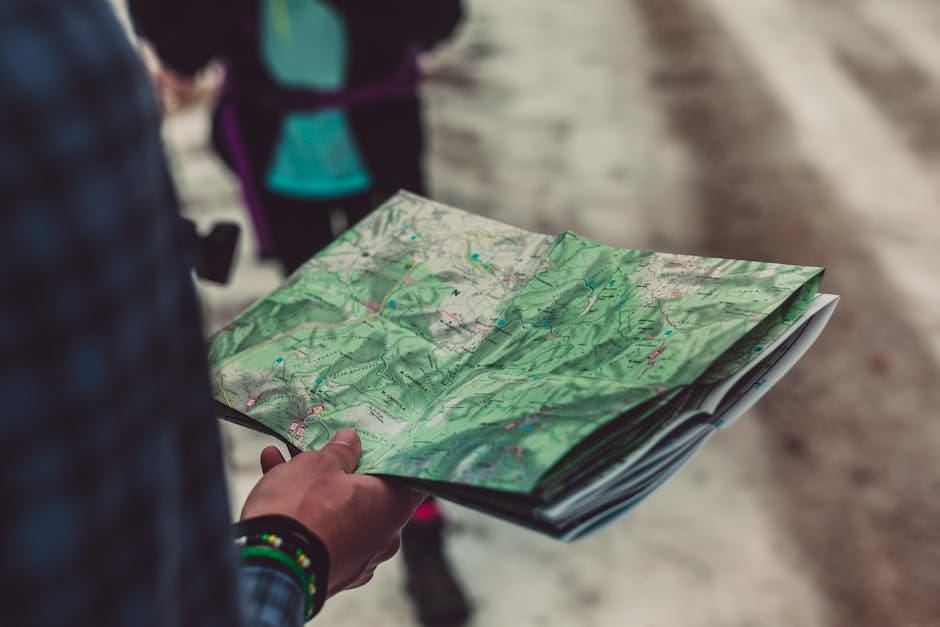
Three seasons ago I killed a 4.5-year-old Missouri buck on a piece of public land I had never set foot on before opening weekend. The deer came from exactly where I expected him to come. I had marked the bedding area three weeks earlier sitting on my couch in Wisconsin, looking at OnX Hunt satellite imagery and topo maps on my iPad. I mapped the terrain funnel the deer would use to move from that bedding area to a bean field a mile away. I set up 12 yards off that funnel on public land the first morning of the Missouri firearm opener, and at 7:18am the buck walked through 15 yards in front of me at a walk. It was one of the most satisfying hunts of my life because almost all the work was done before I ever drove to Missouri.
E-scouting, the practice of analyzing hunting terrain through satellite imagery, topographic maps, and digital markup before setting foot on a property, has fundamentally changed how serious hunters approach public land. OnX Hunt, HuntStand, GoHUNT, and similar mapping platforms have put tools in our hands that professional wildlife biologists would have envied 20 years ago. For the hunter who knows how to use these tools, public land is no longer a lottery. It is a puzzle that can be solved from a kitchen table before the season even opens.
The Platforms Worth Paying For
OnX Hunt is the leader in the hunting e-scouting space. Annual subscription is around $40 for a single state or $140 for a nationwide Elite plan. The app is strong on property boundary data, public vs private lines, recent aerial imagery, topographic overlays, and user-customizable waypoints and tracks. For most serious e-scouters, OnX is the default.
HuntStand is a competing platform with slightly different features. It includes a weather overlay, deer movement prediction algorithms, and a wind-direction visualization. I have used HuntStand for several seasons and found it comparable to OnX in most respects. The deer movement prediction is interesting but not accurate enough to rely on. The wind overlay is genuinely useful.
GoHUNT is more than a mapping app. It is a full Western hunting-planning platform that includes tag draw odds, harvest statistics, and unit-specific information. For Western big game hunters, GoHUNT is essential. For Eastern whitetail hunters, it is less relevant.
Free tools worth knowing. Google Earth Pro is free and provides access to historical satellite imagery, sometimes from multiple years, which is invaluable for seeing how vegetation and land use has changed. USGS topographic maps are free online. State wildlife agency maps are usually free and accurate for public land boundaries.
Reading Terrain Like a Deer Biologist
Satellite imagery shows you vegetation, cover type transitions, and open ground. Topographic maps show you elevation changes, which tell you where deer move. Combining the two lets you read terrain the way a deer reads it.
Deer follow paths of least resistance. On a topographic map, the contour lines that are closest together represent steep terrain. Lines that are further apart represent flatter terrain. Deer will consistently choose the flatter route between two points, especially when not pressured, especially when moving between bedding and feeding areas.
Saddles in ridge tops are natural funnels. A saddle is where the ridge drops in elevation between two higher points. Deer crossing a ridge almost always cross at the saddle rather than hiking up and over the higher points. On your map, find every saddle in the hunting area. Mark them. These are almost always high-value setup locations.
Benches on hillsides, small flat areas in otherwise sloped terrain, are bedding magnets. Deer will bed on benches on the windward side of a slope so they can scent-check the area below while having good visibility up the slope. Find benches on maps, then verify them with satellite imagery that shows open or broken canopy, which suggests actual open bedding structure.
Inside Corners and Funnels
Inside corners of ag fields, where two edges meet at less than 180 degrees, concentrate deer travel. The deer cross the open ground at the apex of the corner and often slow to browse the fringe. An inside corner on an alfalfa field adjacent to public timber is one of the most reliable deer setups in the country.
Creek crossings, pinch points between water and terrain features, narrow strips of timber connecting larger woodlots, these are all funnel locations. On a satellite image, look for anything that forces deer into a narrow corridor. Those corridors are where your stand goes.
The Bedding Area Is the Starting Point
Every serious e-scout starts with locating bedding. Bucks bed in specific areas based on cover, wind access, and escape routes. Identifying those areas on a map lets you predict movement patterns.
Thick cover patches away from property lines are typical bucks bedding. On satellite imagery, look for dark green textured patches of mature timber, patches of young regrowth after a cut, or brushy draws along creek bottoms. These are likely bedding.
The thickest cover on a property is often not the bedding area. Bucks often bed on the edge of thick cover or in small pockets of medium cover that allow them to see and smell, not just hide. The thickest brush is where they hide from danger after they have been spooked, not where they prefer to spend their days.
Public land bedding areas are often different from private land bedding areas because of pressure. On private land where no one walks, bucks bed in relatively comfortable locations. On public land with pressure, bucks bed in terrain that is hard to reach and offers multiple escape routes. Steep bluffs, deep draws, and swampy pockets are classic pressured-buck bedding.
Wind and Access
Every stand location you identify must have a wind direction that works. If the wind is wrong, your scent blows into the bedding area or over the trail the deer will use, and your setup is ruined before you ever sit down. Identify the prevailing wind for your hunting area from the nearest weather station.
Plan an access route that gets you to the stand without crossing deer travel corridors or bedding areas. This often means a longer, indirect walk-in. A 45-minute walk that keeps your scent downwind of bedding is better than a 15-minute walk that blows your scent across the whole property.
Some of the best public-land stands are accessed by canoe or kayak, cutting across water to avoid walking through the cover. If your public land borders a lake or navigable river, map your access routes along the water. You are not the only hunter who will find this terrain, and stand-placement competition is less fierce at water-accessed locations.
Pressure Mapping
OnX Hunt shows parking lots, trails, and often user-submitted waypoints that reveal where other hunters go. The most-hunted parts of any public land are within a half-mile of a parking area. The least-hunted parts are more than a mile from any road.
Plan your stands for the least-pressured areas, not the most convenient. Deer on public land learn to avoid pressure zones by the second or third day of season. If you are the only hunter at a specific spot, that spot will hunt reliably all season. If you are one of six hunters at a spot, the deer will move around you by the second week.
Trailcams, where legal on public land, help confirm your map work. Set up cameras in June and early July, check them in August, and refine your stand plan based on actual deer photo evidence. Not all states allow trail cameras on public land. Know your state regulations.
The Week Before Opener
One week before opening day, I finalize the plan. I have 3 to 5 stand locations identified on OnX, each with a planned access route, a wind direction that works, and a backup plan if that location is already hunted by someone else. I have a truck-based GPS file or downloaded offline maps so the plan works without cell service at the trailhead.
The actual drive to the hunting property is often 6 to 12 hours for out-of-state hunts. I arrive the day before opener, which gives me one evening to physically verify my scouted locations. I do not scout aggressively the evening before opening day, but I do a quick walk-in and walk-out of my primary stand to confirm the terrain, check the wind, and place my gear.
On opening morning, I walk in well before dawn, set up in my scouted location, and let the plan execute. No new decisions, no panic route changes, just trust the map work from my kitchen table. The Missouri buck I mentioned earlier was killed exactly this way. Six weeks of map study had put me in the right place at the right time.
When the Plan Fails
E-scouting is not magic. Sometimes the plan fails. The deer use a different trail than expected. Other hunters occupy your planned stand. The wind shifts wrong. When the plan fails, the skill is adapting on the fly using the map intelligence you already built.
If your planned stand is taken, which happens, you should have 2 to 3 backup locations already identified on your map. Walk to your backup. Do not try to find a new spot by intuition in the field. The field decisions are always worse than the kitchen-table decisions.
If the wind is wrong on day one, hunt somewhere else that day. Do not force a location with a bad wind. I have watched experienced hunters ruin a 3-day hunt by forcing a setup with the wrong wind on day one and educating every deer in the area. Save the primary stand for the right wind.
The Deeper Skill
After a few seasons of e-scouting, you will start seeing terrain the way deer see it. You will look at a topographic map and immediately recognize the bedding pockets, the funnels, the pinch points. This reading-the-map skill translates to reading real terrain faster when you are on the ground, which makes in-field decisions better too.
The hunters who consistently kill mature bucks on public land are the ones who out-prepare the hunters who show up and wing it. E-scouting is not a shortcut. It is a different kind of hunting that rewards patience, analytical thinking, and willingness to spend winter and spring evenings on your iPad.
For a hunter who has never tried e-scouting, start with a $40 OnX single-state subscription and the public land closest to you. Spend ten evenings over the course of a winter reading that land on the map. By the next season, you will hunt smarter, find better stand locations, and understand your local public land in ways you never did just walking it. The return on that small investment is substantial.