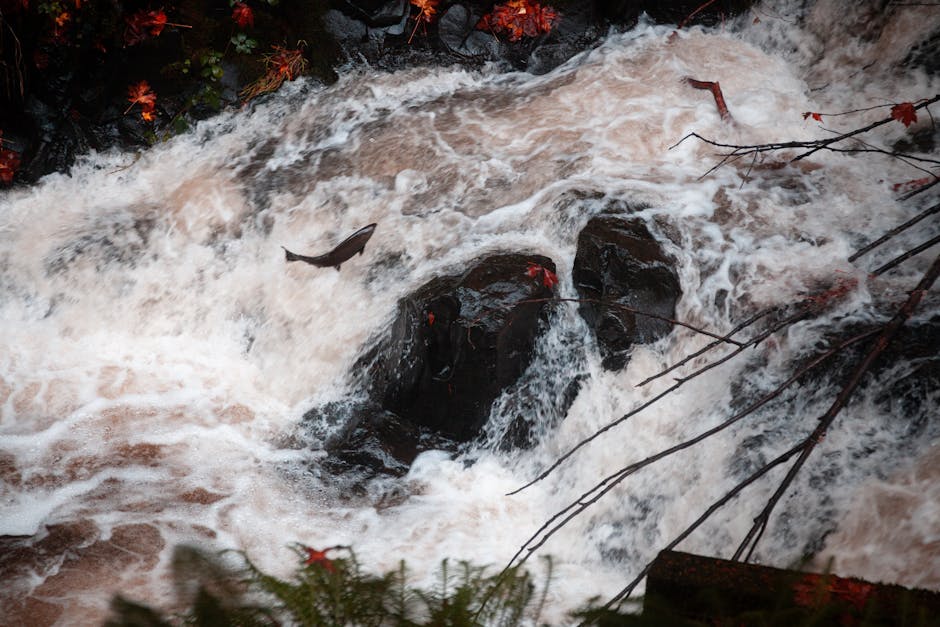
Pacific salmon fishing is one of the most iconic American angling experiences. You're on a boat off the Oregon or Washington coast, the water is 54 degrees, the rain is constant, and you're trolling flashers and bait at 60 feet behind a downrigger. When the rod bends, it bends hard, and for the next 15 minutes you're attached to a 25-pound Chinook that's been fattening itself in the Pacific for three to five years.
The Species
Chinook (King Salmon)
Largest Pacific salmon. Average 15 to 30 pounds, trophy fish over 50. Oily, rich, orange-red meat. Spring-runs and fall-runs depending on river system. Prized by sport and commercial fishermen alike.
Coho (Silver Salmon)
Smaller and more aggressive, averaging 6 to 12 pounds, with trophies to 20+. Lighter-colored flesh, milder taste. Arrive later in summer than most Chinook. Excellent fighters — jump and run.
Sockeye
Red-meated, lean, delicious. Small (4 to 8 pounds) but dense fighters. Limited fisheries in the Lower 48.
Pink Salmon (Humpies)
Smallest and most abundant. Even-year runs on many rivers. Good fishing when they're in.
Chum
Less popular game fish, good smoking fish.
Where and When
Washington Coast
Neah Bay, La Push, Westport, Ilwaco. Summer kings and cohos June through September. Access through charter boats ($250 to $400 per person per day).
Oregon Coast
Astoria, Newport, Depoe Bay. Spring Chinook (April to June) on the Columbia River; ocean Chinook and coho fishing summer through fall.
Puget Sound
Year-round salmon opportunities, regulated heavily. Winter blackmouth (immature Chinook), summer runs, coho in fall.
Alaska
The big destination. Kenai River, Bristol Bay, Southeast, Cook Inlet. Multi-day or week-long lodge trips run $3,000 to $12,000+ per person.
Trolling
The primary ocean salmon technique. A boat moves at 1.5 to 3 knots pulling flashers and bait or lures behind weighted gear.
The Rig
- Downrigger with a ball weighing 8 to 15 pounds
- Flasher or dodger clipped to the downrigger release
- 24 to 48 inches of leader from flasher to bait/lure
- Cut plug herring, whole herring, or a squid-shaped lure
The downrigger gets the bait down to the target depth (40 to 150 feet depending on conditions). When a salmon hits, the release pops, and you fight the fish on the rod alone.
Flashers and Dodgers
These are attractors — metal or plastic pieces that move the bait in a wounded-fish pattern. Hot Spot, Pro-Troll, Q-Cove, and Silver Horde all make good ones. $15 to $50.
Bait
Fresh or brined whole herring is gold for Chinook. Cut plugs, anchovies, and herring all work. Cut at specific angles to create a slow spiral rotation behind the flasher.
Scent additives — Pro-Cure, Bloody Tuna, Mike's Lunker Lotion — extend the bait's effectiveness. $10 to $20 per bottle.
Mooching
A drift-fishing technique using a weighted rig and cut plug herring at a specific depth. Less common than trolling but more hands-on and more productive in some conditions.
Jigging
Heavy metal jigs (Buzz Bombs, Point Wilson Dart, P-Line Laser Minnow) fished vertically in places where salmon stack up — underwater humps, river mouths, cape points. Effective for blackmouth and coho.
River Salmon
River fishing for salmon is a separate game. Drift-fishing cured roe, swinging flies, back-bouncing eggs, casting plugs (K-15 or K-16 Kwikfish, FlatFish). Rivers like the Kenai, Columbia, Kalama, and Cowlitz have dedicated river salmon fisheries.
Tackle
- Trolling rod: 8'6" to 10'6" medium to heavy rod. Lamiglas X11 Salmon, Okuma Classic Pro. $100 to $350.
- Level wind reel: Shimano Tekota 600, Daiwa Saltist Levelwind, Penn Squall. $150 to $300.
- Line: 25 to 30 lb monofilament or 50 lb braid with fluorocarbon leader.
The Charter Option
For first-time Pacific salmon anglers, a charter boat is the efficient introduction. You pay $250 to $450 per person for a half or full day. The boat provides tackle, gear, experience, and access to productive water.
Top charter ports: Westport, WA; Ilwaco, WA; Neah Bay, WA; La Push, WA; Astoria, OR; Newport, OR; Depoe Bay, OR.
Limits and Regulations
Pacific salmon fisheries are heavily regulated. Daily bag limits, annual tag requirements, and emergency closures change often. Washington and Oregon both require specific salmon licenses, Columbia River endorsements, and catch record cards.
Check regulations every trip. A fish you kept legally last year might be closed this year. Rules are updated based on run estimates.
The Weather
Pacific Northwest ocean fishing is cold, wet, and often rough. Swells of 4 to 8 feet are normal; storms cancel trips. Dress in layers of synthetic and wool, over a waterproof outer shell (Grundens, Helly Hansen). Hat with a brim, gloves with palm grip, waterproof boots.
Seasickness is real. Dramamine or scopolamine patches for first-timers; some boat captains carry them.
The Fish
A king salmon on gear you're not used to pulls hard. The runs are long; 80 to 150-yard runs are typical for a fresh Chinook. Fights last 10 to 25 minutes. The fish is often fresh from the salt with sea lice still attached — a prized condition indicating it's only recently entered the area.
The Meat
Fresh-caught Pacific salmon, properly iced immediately, is one of the best eating fish in the world. Grilled over cedar, baked with dill and butter, smoked, or eaten sashimi-style. A 25-pound Chinook fillets out to 15+ pounds of edible meat.
Keep the fish iced immediately after the kill. Bleed it by cutting the gills. Clean it as soon as practical. Salmon quality deteriorates fast in warm conditions.
The Experience
Pacific salmon fishing is about the combination — the ocean, the weather, the work, and the fish. A successful day on the Washington coast with a few fish on ice is as complete an angling experience as North America offers. Book a charter, bring rain gear that actually works, and accept that the experience is half the point.