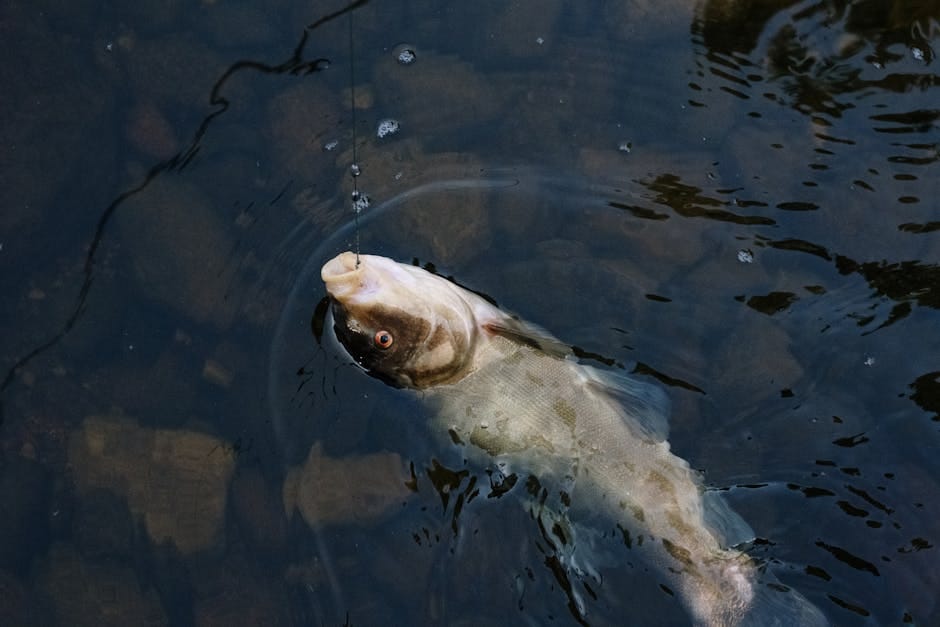
River smallmouth are different animals than lake smallmouth. Current conditions them. Food delivery comes from the current, not from cruising. Shots are shorter, presentations more specific, and the fish commit or reject in a split second — the current doesn't let them hang around examining your lure.
The Current Factor
Smallmouth in rivers position themselves to minimize effort and maximize feeding efficiency. They hold behind current breaks — rocks, ledges, submerged logs — facing upstream. Food drifts to them. They dart into the current for short strikes and fall back.
Everything about fishing river smallmouth is about reading where the current and cover intersect.
Topwater: The Summer Game
Late June through early September, when water temps are 72 to 85°F, topwater is the most productive and fun way to catch river smallmouth. Morning and evening windows, low light conditions, overcast days.
Lures That Work
- Walking baits — Heddon Zara Spook, Rebel Pop-R, Lucky Craft Sammy. $8 to $18.
- Prop baits — Smithwick Devil's Horse, Heddon Tiny Torpedo. $6 to $12.
- Poppers — Rebel Pop-R, Yo-Zuri 3DB Popper. $8 to $14.
- Buzzbaits — War Eagle, Booyah Blade. $6 to $10.
Presentation
Cast topwaters to current breaks, eddy edges, and shallow flats at dawn and dusk. Let the lure sit 2 to 5 seconds before the first twitch. River smallmouth often hit on the pause.
Work the lure in short twitches, 6 to 12 inches per pop. Don't overwork it — the current provides most of the motion. A slow walk of a Spook across a seam catches more fish than a frantic retrieve.
Tubes: The Bread-and-Butter
Tubes — hollow-bodied soft plastic baits — are the consistent producer for river smallmouth across seasons and conditions. A tube imitates crayfish, baitfish, and whatever else the fish wants it to be.
Tube Rigs
- Jighead tube — an internal 1/8 to 3/8 oz jighead inserted into the tube with the line tied to the hook eye exiting the tube's nose. Works for active presentations.
- Texas-rigged tube — tube on a wide-gap hook with a pegged bullet weight. Weedless for cover.
- Insert weight tube — a weight inserted inside the tube body for a gliding, spiraling fall. Imitates a dying baitfish.
Colors
Green pumpkin, smoke with flake, watermelon-red, crawdad brown, bluegill — natural color baits for clearer water. Chartreuse-white or white for murkier water.
Presentation
Cast upstream of the target cover, let the tube drift down through the seam, and work it with subtle twitches. Let the current do most of the work. Pick up on pressure changes — tubes dragging across rocks feel different than tubes being eaten.
Jigs and Craw Baits
A 1/4 to 3/8 oz football head jig paired with a crawfish trailer is a staple in deeper pool fishing. Drag the jig along the bottom, hopping it over rocks. Bites are often subtle taps.
Brands: Buckeye Finesse Football Jig, Strike King Tour Grade Football Jig, Picasso Tungsten Football Jig. Trailers: Zoom Super Chunk, Berkley PowerBait Pit Boss.
Streamers (Spinning Tackle)
A 1/8 to 1/4 oz swimbait or fluke on a jighead imitates baitfish. Retrieve through current seams and over sandbars. Zoom Super Fluke in white or pearl, Berkley Power Finesse Shad.
Tackle Setup
- Spinning rod: 6'8" to 7' medium-heavy, fast action. St. Croix Avid Series, G. Loomis E6X Spinning, Fenwick HMG. $150 to $350.
- Spinning reel: 2500 to 3000 size. Shimano Stradic, Daiwa Tatula LT. $150 to $300.
- Line: 10 to 15 lb braid with 8 to 12 lb fluorocarbon leader. PowerPro braid, Seaguar Invizx leader.
- Baitcaster: Medium-heavy 7' for jigs and topwater. Dobyns 705MH, St. Croix Premier, Shimano SLX. $150 to $400.
Wade or Float
River smallmouth fishing splits between wading and drift boat or kayak fishing.
Wading
Cover less water but fish it more thoroughly. Good for smaller streams with abundant public access. Wear felt or studded boots for traction on slick rocks. Polarized glasses essential for seeing structure.
Drifting
Float a full river section over a day. Drift boat or kayak. Cover miles of water and many targets. Get dropped off upstream, fished down to a takeout. Ideal for bigger rivers with limited wade access.
Timing
Dawn
Topwater window. Fish are shallow, active, and less spooky.
Morning
Transition to subsurface presentations. Tubes, jigs, swimbaits.
Midday
Deeper water. Jigs on ledges, deep pools. Less aggressive fish but bigger on average.
Evening
Topwater again. The last 90 minutes of daylight are often the most productive topwater window.
Reading Rivers
Productive spots:
- Rock gardens in 2 to 6 feet of water
- Deep pools below riffles
- Eddies behind boulders or downed trees
- Current seams where fast and slow water meet
- Edges of grass beds in slow sections
- Bridge pilings and rip-rap
Realistic Days
A solid day of river smallmouth fishing produces 15 to 40 fish, with 2 or 3 in the 3-pound-plus class. A big day: 50+ fish and one or two genuine 4+ pounders. A quiet day: 5 to 10 fish but often bigger on average.
River smallmouth are underappreciated in America. The fishing is consistent, the water is accessible, and the fight is pound-for-pound the best in freshwater.