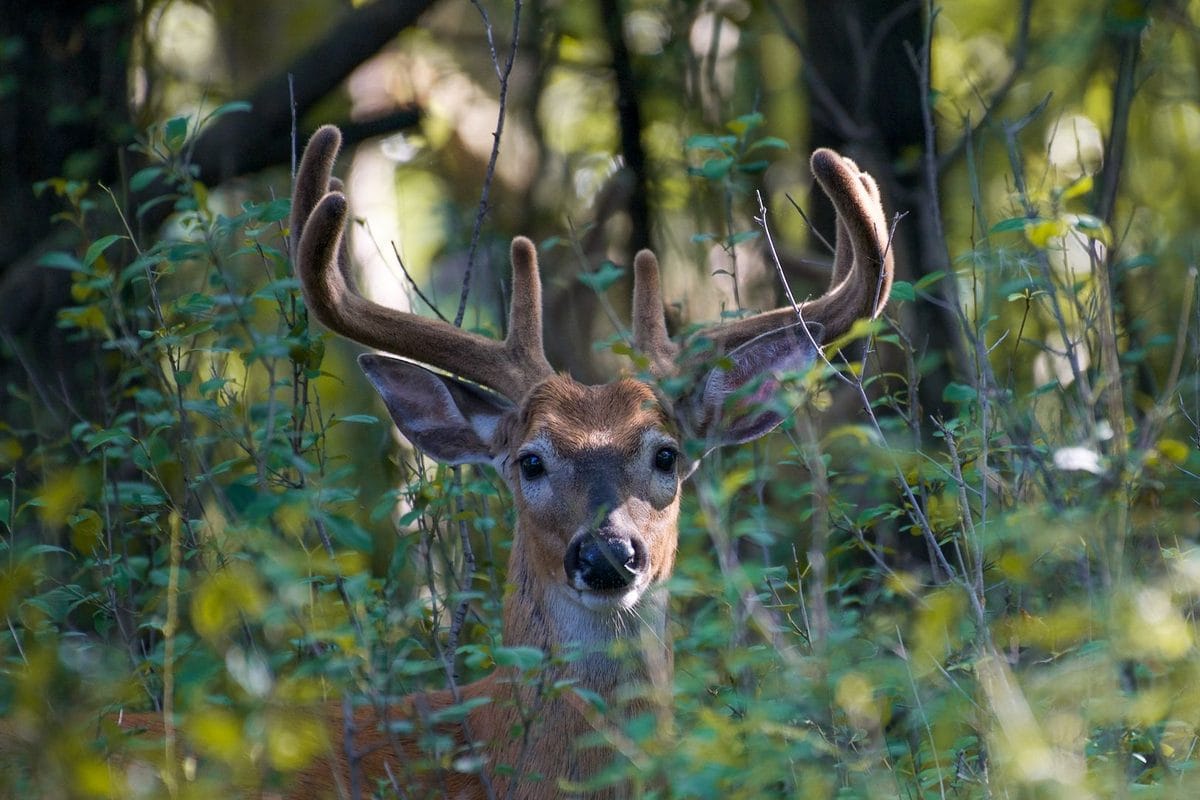
By the time the leaves turn and the season opens, the work that decides whether you fill a tag in November is already finished. The best deer hunters in the country aren't waiting for September to start figuring out where the mature bucks live — they're doing it right now, in the muggy heart of June, when bucks are in velvet, predictable, and easier to pattern than at any other point in the year. Summer scouting is the quietest, least glamorous part of deer hunting, and it's the part that separates the guys who tag a real buck from the guys who burn vacation days sitting over empty trails in October.
June is special for one biological reason. Bucks in velvet are still living in their summer pattern — bachelor groups, low aggression, feeding hard in the same fields and food sources evening after evening to grow antler and pack on weight before the rut burns it all off. That predictability is a gift. A mature buck you locate now, feeding in a soybean field at last light, is showing you exactly where he beds and how he travels, and he'll keep doing it on a near-identical schedule until the early-season shift in late August. Map him in June and you've got two solid months to learn his habits before he ever knows you exist.
Trail cameras: the right way to run them now
The cellular trail camera changed summer scouting more than any piece of gear in the last decade, but most hunters run them wrong and educate the deer they're trying to learn about. The cardinal rule of June camera work is intrusion control. Every time you walk in to swap an SD card, you leave scent, and a mature buck files that away. This is the single biggest argument for cellular cameras — a Tactacam Reveal or a Spypoint Flex sends the photos to your phone so you never have to walk the property to check them. If you're still running SD-card cameras, you've got to discipline yourself to pull cards no more than every three weeks, in the middle of a hot day, in and out fast.
Where you hang them matters more than how many you run. The high-value June setups are field edges over summer food sources, isolated water in dry country, and mineral sites where legal. Don't bother hanging cameras deep in bedding cover right now — you'll bump deer and learn nothing useful, and the summer bedding areas often aren't the fall ones anyway. A few well-placed cameras on food and water in June will inventory nearly every buck using a property. Set them facing north when you can so the rising and setting summer sun doesn't wash out your daylight images, and hang them a touch higher than fall height — chest level on a standing deer — angled slightly down, because summer vegetation is tall and a low camera shoots a wall of green.
Mineral and water — what's actually legal
Mineral sites pull deer and give you spectacular velvet inventory photos, but the legality varies sharply by state and you have to check your own regulations before you dump a bag of anything. A number of states classify mineral and any other attractant as illegal baiting, sometimes year-round, sometimes only within a window of the season. Several Midwest and Southern states that once allowed it have tightened the rules in recent years over disease-management concerns. Don't assume what was legal three seasons ago still is. Look it up for this year, in your state, before you place a site — a velvet photo isn't worth a citation.
Glassing: the old method that still beats everything
For all the technology, the most information-dense thing you can do in June is sit a long way off with good glass and watch deer feed at last light. Pick an evening with a steady wind in your face, set up several hundred yards from a known feeding field where the deer can't see, wind, or hear you, and just watch from a half hour before sunset until dark. You'll learn things no camera tells you — which buck is dominant in the bachelor group, the exact corner of the field they enter from, whether the shooter is a homebody or a wanderer. A $400 pair of 10x42 binoculars and a few patient evenings will teach you more about a property than a wall of cameras.
The discipline here is staying off the property otherwise. The temptation in summer is to walk every trail, hang stands, trim shooting lanes, and generally make yourself at home. Resist most of it. A mature buck's tolerance for human intrusion is the whole game, and the property you tiptoe around in June and July is the one that's still holding a relaxed, daylight-moving buck when the season finally opens.
What to do with the next eight weeks
Inventory now, then go quiet. Get cameras on food and water in the next two weeks, glass a handful of evenings through late June and July to confirm who's living where, and then stay out. Save the intrusive work — hanging stands, cutting lanes, walking the bedding — for a single efficient push in the last days of summer, ideally just before an early-season opener, so the deer have minimal time to react. The buck you've been watching all summer in a soybean field doesn't owe you anything in October. But if you've done June right, you'll know exactly where to be on opening evening, and that knowledge is the whole job.